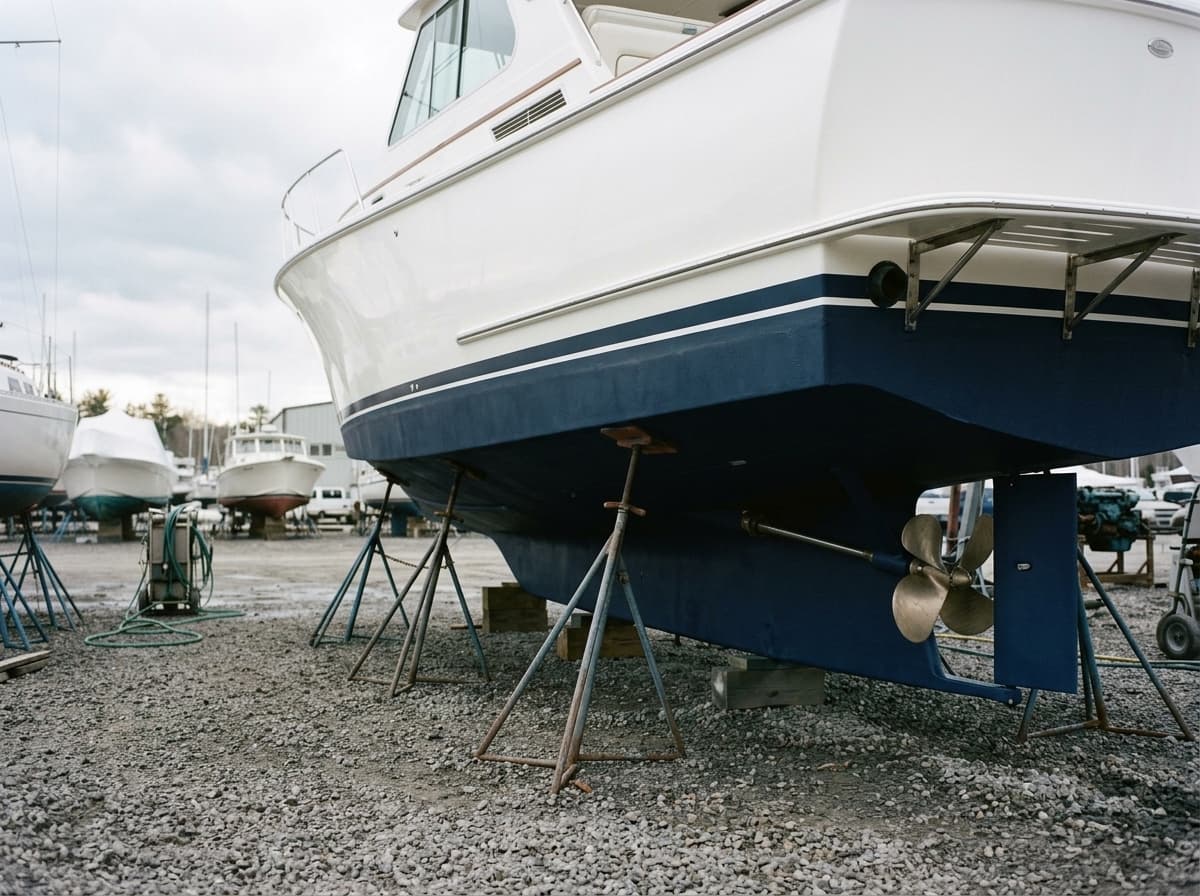
How’s your bottom paint holding up?
Boat painting in Hampton Roads is a job most owners put off one season too long
Bottom paint and topside painting across Hampton Roads, priced after we’ve looked at your own hull. A real number, a real timeline, and an honest answer about whether this is the year.
When does a boat actually need repainting?
Almost nobody knows the answer for their own boat, which is why so many repaints happen a season late and cost more for the wait. Here’s what we look for.
On the bottom
01
The previous color is showing through
Paint that’s gone thin enough to show the previous color or the barrier coat through it.
02
Growth comes back faster every clean
Ablative paint that’s worn out stops releasing, so the interval between dives gets shorter on its own.
03
The coating has lifted in patches
Areas where the coating has come away from the hull altogether, rather than simply worn thin.
On the topsides
01
There’s little gelcoat left to cut
Gelcoat that’s been compounded so many times there is not much of it left to work with.
02
The color no longer comes back
Polishing brings up a shine, but the color underneath stays flat.
03
Crazing, chalking or repairs that don’t match
Chalking that returns within weeks of a detail, fine crazing in the surface, or old repairs that no longer match the hull.
Not sure which of those describes her? That’s the normal position to be in, and it’s what we come out to look at.
I was definitely impressed with their work. It was quoted reasonable and the guys were on time and professional. If you are in Norfolk they are the crew you want working on your boat.
How a repaint actually runs
Paint is the least understood thing we do, and most of the worry about it is really worry about time. So here’s the whole sequence with real timings against it.
01
We come and look at the boat
In the water or out, and we go through what she needs with you. You get a written scope and a price. No charge, and no obligation to go ahead.
Free
02
Haul out and pressure wash
The boat comes out and the bottom is washed off immediately, while the growth is still soft.
Half a day
03
Preparation
The part that decides how the job turns out. Old coating assessed, failed areas taken back, the surface sanded and cleaned, blisters dealt with if any turn up. This is the longest stage and the one nobody sees in the finished boat.
The longest stage
04
Application
Coats go on with the right time between them for the system and the weather. Antifouling is generally two coats with a third on the waterline and leading edges. Topside work in linear polyurethane takes primer, fairing where needed and finish coats.
Set by the product and the weather
05
Cure and back in the water
Antifouling needs a set window between the last coat and launch, and how long depends on the product. Topside paint needs considerably longer before the boat gets used properly.
Set by the product and the weather
3 to 5 days
On a 40 to 60 foot boat in normal conditions. That covers haul out, wash off, preparation, coats and the cure window before launch. Cold or wet weather stretches it, and we would rather tell you that than rush a coat.
Two different jobs, for two different reasons
Below the waterline
Bottom paint
Antifouling does one job. It stops growth taking hold on the underwater body, so the boat holds her speed, burns less fuel and cleans more easily every visit. When it stops working, everything below the waterline gets harder and the hull underneath is at risk.
We work with ablative and hard antifouling systems, and choose based on how the boat is used.
Above the waterline
Topside and yacht painting
Topside painting is about what the boat is worth and how she looks from the dock. A two part linear polyurethane system, Awlgrip or Alexseal, holds a finish for a decade or more. Gelcoat, once it’s been compounded a few times, won’t come close.
Hull sides, boot stripe and cove stripe, transom, and the superstructure where the boat calls for it.
Boat painting questions
We don’t publish a figure for this one, because a number given without seeing the boat would be a guess you would have to renegotiate later. The spread on a boat that size is genuinely wide: sound existing paint that needs a light sand and two coats sits at one end, and failing coating that has to be taken back, or blistering, sits at the other. Looking at the hull is what turns that into a number, and it costs you nothing.
Every two to three seasons for most boats kept here. That’s sooner than the same boat would need in colder water. The Chesapeake fouls hard from May onwards and it works antifouling hard in the process. Boats that get dived regularly through the season tend to get the longer end of that range, because the coating is being looked after instead of left to fight on its own.
For bottom paint on a 40 to 60 foot boat, 3 to 5 days in normal conditions. That covers haul out, wash off, preparation, coats and the cure window before launch. Cold or wet weather stretches it, since paint won’t go on properly below certain temperatures, and we’d rather tell you that than rush a coat.
Two to three seasons here. Running the boat hard shortens it, since ablative paint is meant to wear away in use. So does sitting in warm brackish water all summer, and so does a diver cleaning too aggressively. The one owners forget is long spells on the hard, because some systems dry out and never work properly again once she goes back in.
Yes, and more than most owners expect on a boat over 40ft. A buyer’s surveyor will look at the bottom first, and fresh, sound antifouling with a documented history says the boat has been looked after. A bottom that’s patchy, blistered or carrying ten layers of old coating raises a question about everything else, and it comes off the price.
On a small trailer boat, yes, plenty of owners do. At 40ft and above it stops making sense. You’re paying for the haul out and the yard time either way, the boat has to be staged and scaffolded, sanding antifouling produces waste that has to be contained and disposed of legally, and the job takes days rather than a weekend. Most owners who try it once at that size don’t try it twice. If you want a number to compare against doing it yourself, we’ll give you one.
Again, after we’ve seen the hull. You’ll find figures online in the $5,000 to $10,000 range, and those come from paint calculators run by chandleries: they price the materials and stop there. Preparation is most of what a topside job actually costs, and how much fairing a hull needs before any color goes on is not something anybody can tell you from a web page.
A full topside repaint is 2 to 4 weeks out of the water. Preparation takes the majority of it, application needs settled weather, and the finish needs curing time before the boat gets used normally. It’s a shoulder season job, and we’ll say so if you ask us for one in the middle of July.
Wrapping costs less at the start. It suits an owner who wants a color change for a few years and nothing more. A vinyl wrap on a boat lasts around 3 to 5 years in this climate, and it does nothing for a gelcoat that’s already failed underneath it. A two part linear polyurethane paint job costs more up front, holds for a decade or more, and fixes the surface while it’s at it. If the gelcoat is sound and you want a different color for a while, wrap. If the gelcoat has run out, paint.
It depends on how much gelcoat is left, and that’s something we measure on the boat. Gelcoat has a finite thickness and every compounding takes a little more. If there’s enough left, restoration is far cheaper and we’ll tell you to do that. If the boat has been cut back repeatedly over the years, or the color no longer comes back at all, restoration will buy a season and then you’re back where you started. We measure before recommending either.
Both are two part linear polyurethanes and both will outlast gelcoat by a wide margin. Awlgrip has the longer track record and an enormous color range, and it’s unforgiving about application. That’s fine when somebody is spraying it properly. Alexseal is more tolerant to apply, holds gloss well over the years, and repairs far more easily, and the repairs matter on a boat that gets used hard. We choose based on the boat, how she’s kept and whether you’d rather have the easier repair or the deeper original finish.
Book a hull assessment
Nobody buys a paint job off a web page, and we wouldn’t want you to. Book us in and you’ll get a written scope with a real number against it. If she’s got another season in her, that’s what you’ll hear.